For the longest time, animated films have been mistaken for a distinct “genre” separate from all other films and, for whatever reason, consisting entirely of works made for children ages 3 and up. This has led many people to take animated films for granted, ignoring the multitude of animation techniques these works utilize and labelling them as simply “cartoons” that are only used in the presence of a child that needs to be distracted and never otherwise. If you have ever scrolled through a list of genres to find a film to watch, you might have seen a separate category with every animated work ever made marked as “Animation”, “Animated films”, or, even worse, “Cartoons”.
What many people fail to realize is that animation is a very complex art form that is not for the faint of heart, requiring a lot of time, patience, and resources. It is also multifaceted as it encompasses various animation techniques, each with its own unique methods and charm.
Traditional/Cel Animation Technique
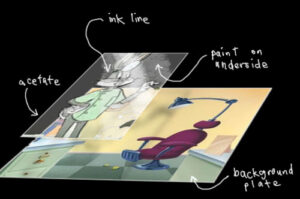
Cel animation is the oldest animation technique and the foundation of the entire art form, which is why it is also known as “traditional animation.” Using this technique, every element in one frame of an animated film is drawn on a separate celluloid sheet, or a “cel”, that is then layered onto other cels and photographed to create one frame. The process is then repeated for every frame in the film. While the technique lends a lot of life and personality to the finished product, it is also extremely time-consuming and costly, which is why it is very rarely used today.
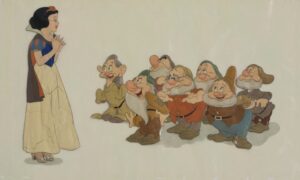
One popular example of this animation technique is Disney’s Snow White and the Seven Dwarfs, the first feature-length film to use traditional animation. The film has a runtime of 83 minutes and used approximately 362,919 photographed frames, and each frame was constructed from over 1.5 million individual hand-drawn cels.
2D Animation Technique
While very similar to traditional animation in that the end result shows characters moving within a two-dimensional space, the 2D animation technique is a result of the art of animation evolving over time, as the introduction of computers led to technological innovations that made 2D animation less time-consuming and more accessible, such as keyframes (the main frames within a series of that signify the main points of movement and transition), tweening (a computer software automatically inserting the frames between the keyframes), and rigging (the creation of a “rig,” or a set of controls that allows animators to move individual parts of a character instead of having to draw the entire character multiple times).
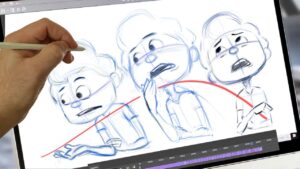
The 2D animation technique is often most remembered by what is known as the Disney Renaissance, an era of 2D animated films made by Walt Disney Animation Studios. This period is remembered for its beloved and successful films, such as The Lion King, The Little Mermaid, and Beauty and the Beast, as well as for the clear technological progress seen through the increasing quality of each successive film.
3D Animation Technique
The 3D animation technique is generally considered revolutionary as it radically changed how the medium looks and how it is made: animators can now create three-dimensional models of characters and move them around in three-dimensional environments, lending a sense of realism to the work and unlocking an unprecedented potential for detail. As such, the 3D animation technique represents the leaps and bounds that have been achieved in animation technology.
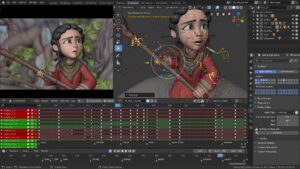
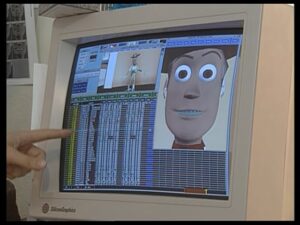
After the technique was developed, many Hollywood films began to employ the new technology in their live-action films, such as Jurassic Park and Terminator 2: Judgment Day, to create realistic visual effects that would have been very difficult to achieve otherwise. In 1995, Toy Story, the first fully computer-animated feature-length film, was released after four years of development and production, and the film’s massive success and popularity paved the way for the popularity of the 3D animation technique that continues to this day.
Stop-Motion Animation Technique
The epitome of the art form, the stop-motion animation technique uses physical objects or models that are positioned and then captured to create a single frame, then the object is moved and another frame is captured, and the process repeats. When the individual frames are played in rapid sequence, the illusion of movement is created. This animation technique is versatile in that anything can be used to create a stop-motion animated film, from everyday household objects to clay or plasticine character models. It also requires immense patience and attention to detail, as the objects and models used are usually created and moved by hand.
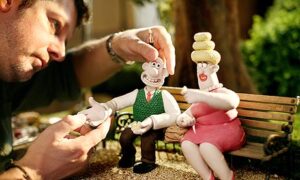
Despite stop-motion’s apparent difficulty, many animators, such as renowned animator and director Tim Burton, prefer this animation technique over others. Additionally, many animation studios prefer to work exclusively with the stop-motion style, such as LAIKA Studios and Aardman Animations.
The Versatility of Animation Techniques
Animation is a very versatile medium that encompasses a wide range of animation techniques, each unique in its own right and each requiring immense amounts of time, effort, and patience to create the finished product. Whether they choose to animate on cel sheets, a computer software, or with physical models, animators can use any of these various techniques to bring an unlimited number of stories to life.
Leave a Reply